
After the Storm Passes: How Hurricane Debris and Cleanup Create New Injury Risks in Tampa Bay
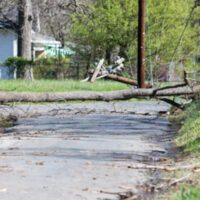
Most people in Tampa Bay think of the hurricane itself as the dangerous part: the wind and the surge. But the weeks after a storm often bring their own wave of injuries, and many happen on clear, sunny afternoons while neighborhoods are cutting, hauling, and rebuilding. Our Tampa personal injury lawyers see how cleanup season changes the risks local families face, and how it complicates the question of who is responsible when someone gets hurt.
The Danger Does Not End When the Wind Stops
After a major storm, thousands of people take on work they rarely do. Homeowners climb ladders to tarp roofs. Tree crews, some experienced and some assembled overnight, arrive in force. Debris piles line the curbs for weeks.
Federal safety data reflects how hazardous this period can be. In a summary of its hurricane response situation reports, the Occupational Safety and Health Administration (OSHA) listed chainsaw-related hazards as about 30 percent of the safety concerns it documented in one group of cleanup activities. In its tree trimming guidance, OSHA also reported that when aerial lifts were used, fall protection was missing or used incorrectly at 75 percent of the work sites it observed.
Those numbers involve trained workers. Residents and hurried contractors working without supervision often face greater risk. Common post-storm hazards in Tampa Bay include:
- Curbside debris piles that block sight lines at intersections and driveways, raising the risk of car, bicycle, and pedestrian accidents
- Nails, broken glass, and torn sheet metal left on sidewalks, yards, and parking lots
- Partially cut trees and hanging limbs that fall days after the storm
- Downed power lines hidden beneath brush or standing water
- Portable generators operated too close to homes, creating carbon monoxide danger
- Unsecured loads falling from debris trucks and trailers
Who Is Responsible When Cleanup Causes an Injury?
No one is to blame for a hurricane. Negligence during the recovery is a different matter. A tree service that drops a limb onto a neighbor, a hauler that fails to secure its load, or a business that reopens its parking lot while it is still littered with debris may all bear responsibility for resulting injuries. That last scenario often raises questions a Tampa premises liability lawyer can evaluate.
Insurers sometimes frame every post-storm injury as an unavoidable consequence of the weather. That argument weakens as time passes and hazards become known and foreseeable.
Coverage is another complication. Some storm-chasing contractors carry little or no insurance, so recovery may depend on property owners, general contractors, or your own policies.
Florida’s Fault Rules Raise the Stakes
Under section 768.81(6), Florida Statutes, a person found to be more than 50 percent at fault for their own harm in most negligence actions cannot recover any damages. After a storm, expect insurers to argue that you should have seen the debris pile or stepped around the hazard.
There is also a practical problem unique to cleanup injuries: the scene disappears. Debris gets hauled away and property gets repaired. Photos taken immediately, plus names of witnesses and contractors, can become critical evidence.
Talk to Someone Who Understands Post-Storm Claims
If you or someone you love was hurt during storm recovery, the questions of fault and coverage are rarely simple. The Tampa personal injury lawyers at Florin Gray can investigate what happened, identify who may be responsible, and pursue the compensation available under Florida law. Call Florin Gray to talk through your situation before the evidence is gone.
Source:
osha.gov/etools/hurricane/sampling-monitoring-summary/part1
